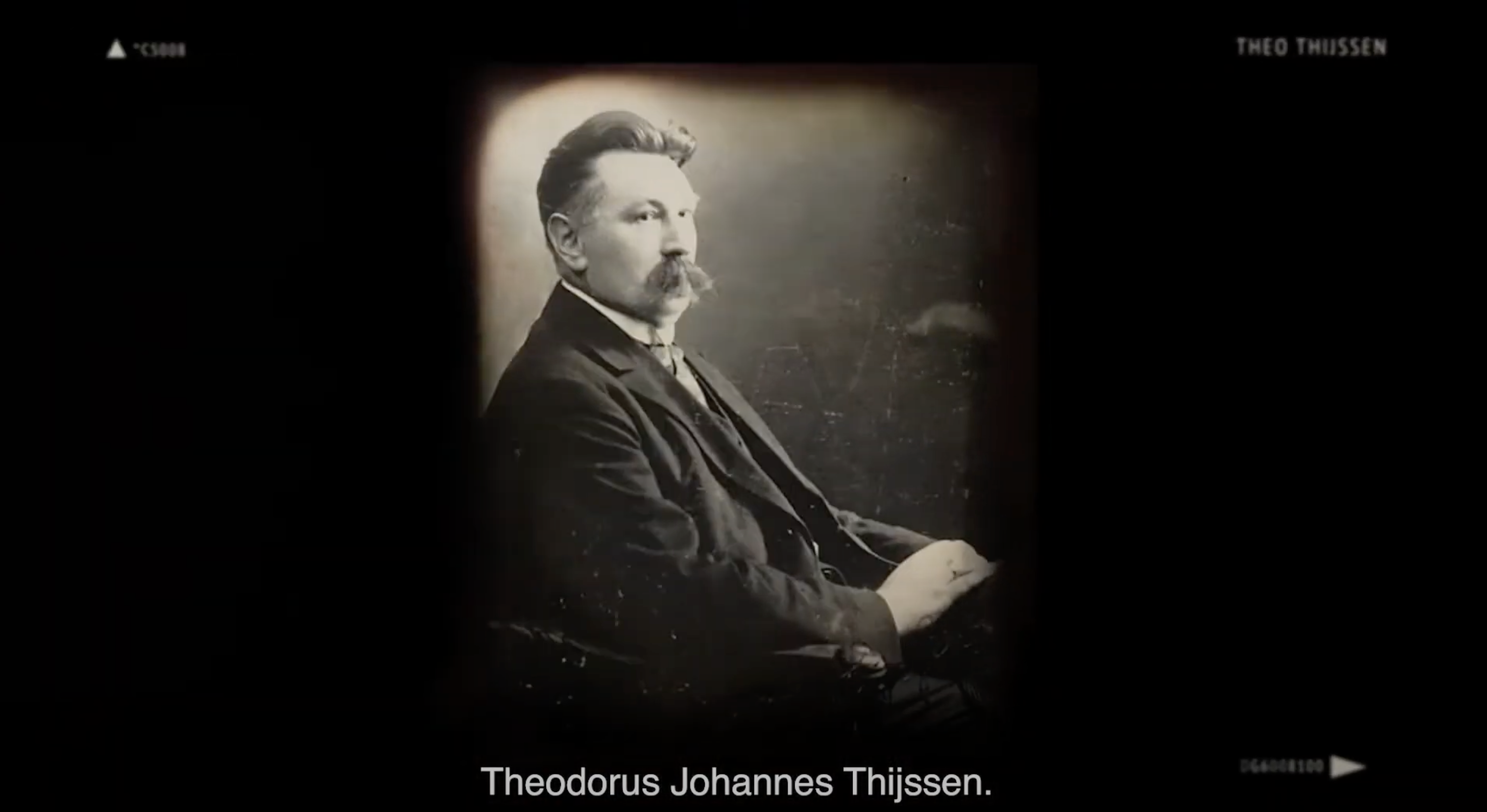
Theodorus Johannes Thijssen: The Building's Namesake
The Theo Thijssenhuis, which houses parts of the Amsterdam University of Applied Sciences, was named after one of Amsterdam's most beloved historical figures: Theodorus Johannes Thijssen (1879-1943), a writer, schoolteacher, and socialist politician who left an indelible mark on Dutch education and literature.
Born on June 16, 1879, in Amsterdam to a shoemaker's family, Thijssen grew up in modest circumstances in the city's working-class neighborhoods. Despite financial hardships, he managed to become a teacher after passing a difficult entrance examination for the national teacher training program. This background would later inform his writing and political views, as he maintained a lifelong commitment to improving educational opportunities for working-class children.
As an educator, Thijssen was revolutionary for his time. Unlike many of his contemporaries who viewed education as primarily about discipline and rote learning, Thijssen advocated for child-centered approaches that respected the individuality of each student. He criticized standardized teaching methods and fought for educational reforms that would make schooling more meaningful and accessible.
Thijssen's most famous literary work is 'Kees de jongen' (Kees the Boy), published in 1923, which is considered a classic of Dutch literature. The semi-autobiographical novel follows a young boy growing up in Amsterdam at the turn of the 20th century, capturing the hopes, dreams, and struggles of childhood with remarkable sensitivity and insight. The novel's protagonist, like Thijssen himself, comes from a working-class background and harbors ambitions that seem beyond his social station.
Beyond his contributions to literature and education, Thijssen was also politically active as a member of the Social Democratic Workers' Party (SDAP), the predecessor to today's Dutch Labor Party. He served on the Amsterdam city council and later in the Dutch parliament, where he advocated for educational reform, workers' rights, and social justice.
When the former tax archive building on Wibautstraat was repurposed for educational use, naming it after Theo Thijssen was a fitting tribute. The building's transformation from an administrative center to a place of learning and creativity mirrors Thijssen's own belief in the transformative power of education.
Today, the Theo Thijssenhuis stands not just as a functional educational space but as a monument to a man who dedicated his life to expanding educational opportunities and enriching Dutch cultural life through his writing. His legacy lives on in the collaborative, innovative approaches to learning that take place within its walls.
Memory Connections
Discover how this memory connects to others
Historical Context
Theo Thijssen (1879-1943) was an influential Dutch writer, teacher, and politician whose legacy in education reform and literature made him a fitting namesake for the building that now houses educational programs at the Amsterdam University of Applied Sciences.
Location
The Theo Thijssenhuis is named after this influential Amsterdam figure, creating a meaningful connection between the building's educational purpose and Thijssen's legacy as a teacher and educational reformer.
Time Period
Theo Thijssen lived from 1879 to 1943, during a period of significant social and educational reform in the Netherlands. His work and ideas continue to influence Dutch education today.
Themes
Related Memories
Tram and Bus Collision at Wibautstraat
Historical photograph documenting the collision between tram line 3 and an NZH bus at the intersection of Wibautstraat and Ruysstraat in 1963.
Firefighters Occupy Tax Office on Wibautstraat
Historical photograph documenting the 1983 protest when Amsterdam firefighters occupied the tax office building during wage disputes.
Riotous eviction of squat De Blaaskop
Historical photo showing the empty plinth in front of the Wibauthuis after the eviction of the De Blaaskop squat on January 13, 1982.